Italian Air Force P-72A patrols intensify south of Sicily as Russian submarine activity remains a factor
Operating from Sigonella Air Base, the aircraft repeatedly patrolled the stretch of sea linking North Africa to Sicily, an area of long-standing strategic relevance. These missions took place during t
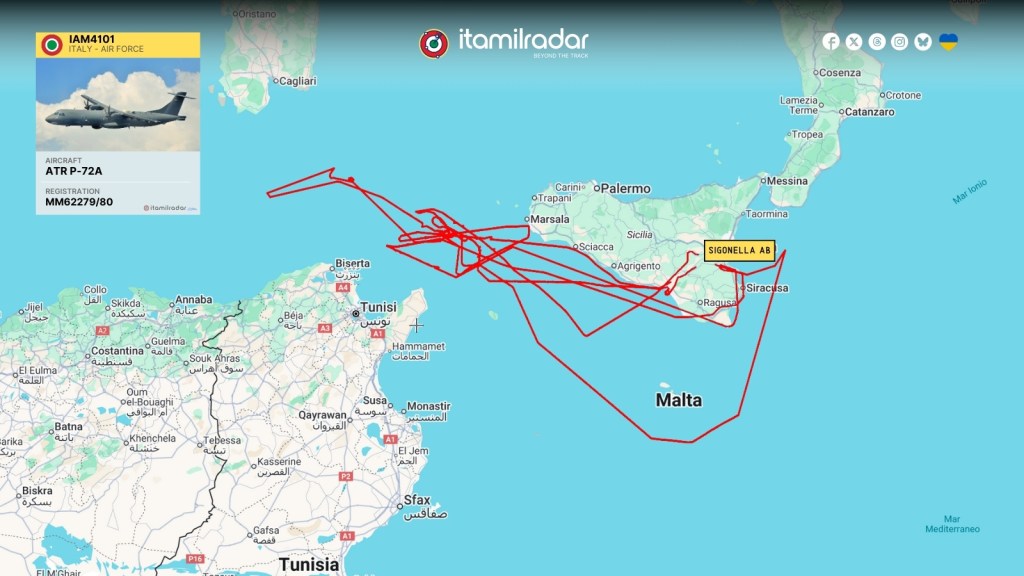
Operating from Sigonella Air Base, the aircraft repeatedly patrolled the stretch of sea linking North Africa to Sicily, an area of long-standing strategic relevance.
These missions took place during the Christmas period, a timeframe that typically sees reduced military activity. The decision to maintain sustained aerial coverage in this sector therefore appears deliberate. Today, the Tunisia–Italy corridor remains a key maritime crossroads, not only for commercial traffic but also for military movements and broader regional security dynamics.
Part of this patrol activity could be indirectly connected to the recent presence of the Russian Navy’s Kilo-class submarine Krasnodar in the Mediterranean. While the P-72A itself does not possess anti-submarine warfare capabilities and cannot conduct a classic submarine hunt, it still plays a valuable role in maritime domain awareness. By monitoring surface traffic, identifying anomalies and contributing to a shared operational picture, the aircraft can support wider surveillance efforts involving other national or allied assets.
At the same time, it would be incorrect to interpret these sorties exclusively through the lens of Russian naval activity. The area between Tunisia and Italy is routinely covered by Italian patrol aircraft as part of standing national surveillance tasks. These include monitoring shipping routes, supporting maritime security operations and ensuring situational awareness along Italy’s southern approaches. At present, there is no concrete evidence allowing a definitive link between these specific flights and the movements of Krasnodar.
What stands out is the persistence of the patrols. The flight tracks show extended on-station times and repeated coverage of the same maritime corridors, suggesting an emphasis on continuity rather than isolated missions. Even without ASW sensors, the P-72A remains a useful platform for maintaining constant oversight of a sensitive maritime space, especially in periods of heightened uncertainty.
Whether driven by routine requirements or by a more cautious posture linked to the broader regional context, these missions underline how the central Mediterranean continues to demand close attention. In recent days, the Tunisia–Italy sea lanes have once again proven to be an area where Italian surveillance remains steady, visible and strategically relevant.