Why wasn’t a Type 45 destroyer sent to guard Cyprus?
Despite weeks of increased tensions in the Gulf, the UK opted not to send any naval vessels to protect assets or people in the region. The post Why wasn’t a Type 45 destroyer sent to guard Cyprus? app
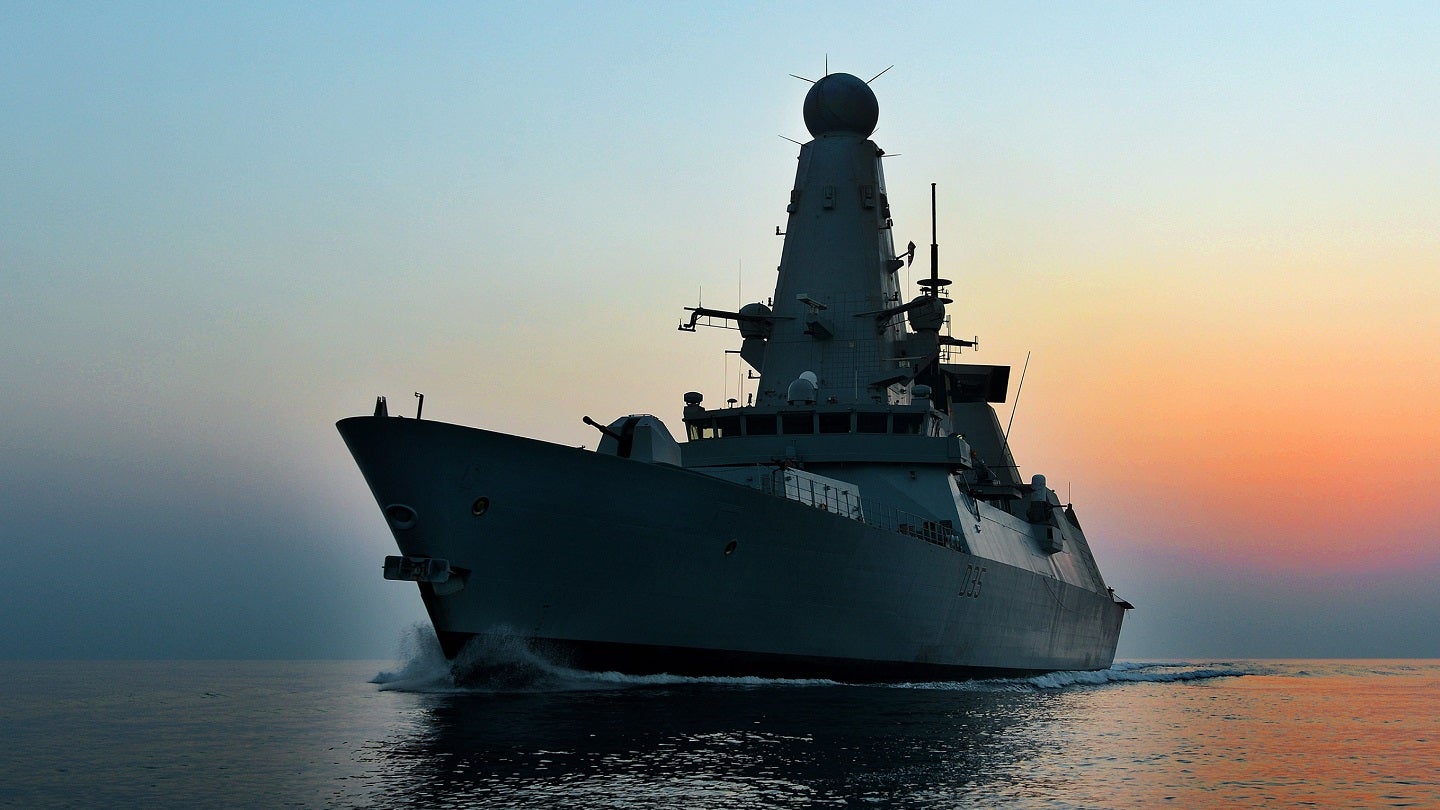
Despite the Royal Navy having at least two Type 45 destroyers available for operations, the UK Government seems to have determined that the threat from Iranian missiles on UK assets in the Mediterranean was not high enough to warrant a deployment.
As it happens, this calculation appears to have been a mistake, as an Iranian drone crashed into RAF Akrotiri air base on the island of Cyprus. The damage caused was initially unclear, but the point was made; Iran or its less technologically advanced proxies could penetrate the UK’s defences.
Not long after, the UK Government sought to regain control of the narrative, proclaiming Iranian missiles having been intercepted by RAF combat aircraft, potentially F-35B stealth fighters.
But the question remains: why wasn’t a Royal Navy Type 45 air defence destroyer sent to the region in advance of the first joint US-Israeli strikes on Iran, actions which look to have sparked a regional conflict?
In a huge dose of irony, in recent days HMS Duncan completed its participation in Exercise Sharpshooter off the coast of the UK, testing its air defence systems against drone and missile threats.
No explanation has been provided for the absence of a Type 45, a deployment still well within the capability of the Royal Navy.
Don’t let policy changes catch you off guard. Stay proactive with real-time data and expert analysis.
The strike on RAF Akrotiri last night is deeply concerning, an example of the dangerous and indiscriminate attacks by Iran & its proxies across the region.
Our best assessment is that the drone was fired before the Prime Minister's statement last night on the US use of UK bases.
Senior officials were wheeled out to speak on the strike on Akrotiri, amid a great deal of furrowed brows.
The strike was “an example of the dangerous and indiscriminate attacks by Iran & its proxies across the region”, said John Healey, UK Defence Secretary of State.
Continuing, Healey said that the damage “minimal” and there were “no casualties”.
No harm done, it appeared to say.
If ever a regional conflict could have been wargamed to highlight just how denuded of assets the Royal Navy has become, the Iran-Middle East crisis would surely have come up.
In the Gulf, there is nothing left of Operation Kipion and the Royal Navy’s deployment East of Suez. Not a single active ship remains, with the decommissioned Type 23 frigate HMS <em>Lancaster</em> sitting alongside the UK Naval Support Facility base in Mina Salman, awaiting disposal.
A Type 23 frigate could have been used to secure key maritime routes, lend a hand protecting the US naval force operating in the Indian Ocean, or indeed act as a point defence system for the civilians of any number of Gulf cities bombarded by Iranian missiles and drones.
Some 300,000 UK nationals at thought to be in the Middle East, either residents or holidaying.
The Royal Navy’s former minehunting fleet, also based in Bahrain, was lauded by the US Navy as a singular capability that the UK was able to offer. All the ships have now gone, when they could otherwise be used to search for Iranian mines in the Strait of Hormuz.
As for the previously mentioned naval base, it commands no ships, its personnel tasked on other duties. Bult at a cost of over $20m, the site is now just a collection of rooms with no purpose.
The UK is also unable to offer any subsurface threat, with the only available Astute-class nuclear-powered attack submarine currently alongside in Australia, part of the proofing exercises under the AUKUS programme.
On present course, the near term appears unbelievably bleak for the Royal Navy, shorn of platforms it needs, and deprived of the agency to deploy and protect UK interests with those few remaining in its inventory.